

Essaouira
The pearl of the Atlantic, the city of the Alizés, the cradle of Gnaoua music, Essaouira is renowned for being a true haven of peace where history and nature have shaped a city with unique charm. Multicultural, welcoming, and alternative, Essaouira is an essential destination for rejuvenation. Frequented by artists, writers, and adventurers of all stripes, Essaouira instills in visitors vivid emotions tinged with gentleness. The hinterland of Essaouira alternates stretches of beaches whose waves and winds are conducive to surfing and kitesurfing, as well as dunes where argan and juniper trees compose a magnificent backdrop to Berber villages and a world still preserved.
Explore the city of Essaouira from our hotel. Our addresses combine the charm of tradition with the comfort of modernity, ensuring you moments of rest and entertainment.

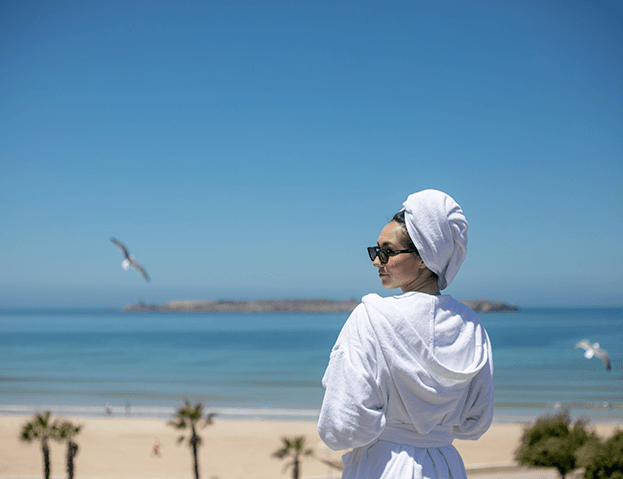
The Essaouira Hotel is a perfect blend of tradition and modernity. Bathed in sunshine, swept by the freshness of the sea breeze, it offers a breathtaking view of the Atlantic Ocean.

Stroll along the beach and the seafront
Essaouira is, first and foremost, the ocean and its long stretch of fine sand. It is very pleasant to walk there, for example to reach the medina directly along the sand, or to stroll on the seafront promenade that runs beside it. You can also opt for a camel or horse ride, which often start from Diabat beach, just a few minutes’ walk away.
Enjoy surfing, windsurfing or kitesurfing
Essaouira is a popular spot for surfing, windsurfing and kitesurfing. Its waves and the winds that sweep across the bay have built its reputation, and even international competitions are held here. Even beginners, adults and children alike, enjoy the beach, where they find waves that are perfect for getting started. Surf schools will guide you to the right place according to your level. For a change of scenery, you can also head to nearby Diabat beach, or go as far as Sidi Kaouki, about twenty kilometers away.
Experience music and festivals
Essaouira has long pulsed to the rhythm of music. Today, it continues to cultivate this identity, notably through its festivals: the most emblematic is the Gnaoua Festival, now the Gnaoua Festival Tour (June), which has brought this music back into the spotlight and made fusion its strength; the “Printemps des Alizés” (April), centered on chamber music and opera, highly sought after by demanding music lovers; the “Festival des Andalousies Atlantiques” (October), which celebrates works written in both Arabic and Hebrew; and, more recently, the MOGA festival (September–October), dedicated to electronic sounds.
Discover argan oil cooperatives
The hinterland of Essaouira forms part of the 800,000 hectares in southwestern Morocco, between Essaouira and Agadir, listed by UNESCO as a biosphere reserve, and with good reason. It is the only place in the world where the argan tree, known as the “tree of life,” grows. Among its many uses, one of the best known is the extraction of argan oil from the kernels of its fruit. You can visit one of the many women’s cooperatives, where they will demonstrate an age‑old process that is fascinating to watch. You can also buy high‑quality argan oils, both cosmetic and culinary.
An original, peaceful medina
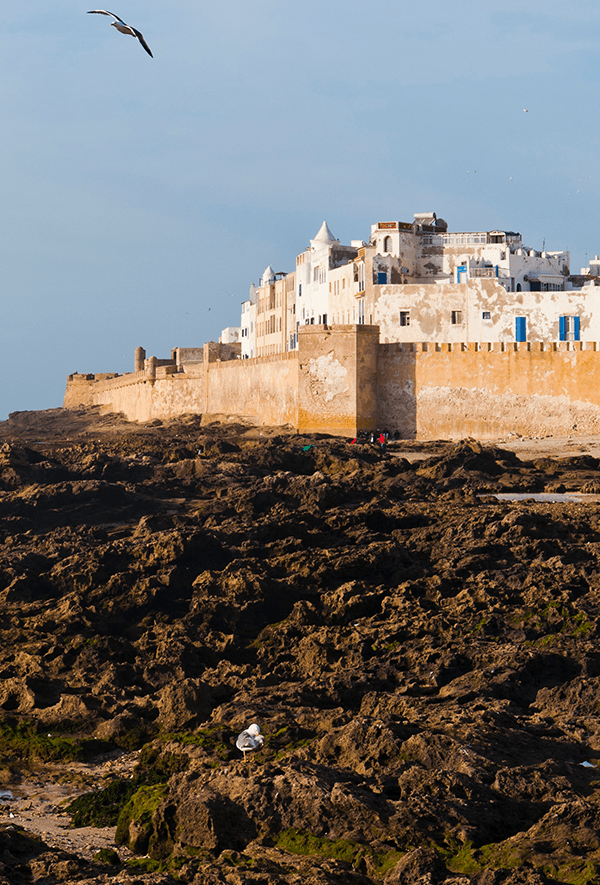
Essaouira’s medina is unique and easy to navigate. Built relatively late compared to other city medinas, it is distinctive in that it was constructed according to a plan. It was commissioned by the Alaouite sultan Sidi Mohammed ben Abdellah from a French architect, Théodore Cornut, who came from the Vauban tradition. As a result, its straight streets intersect rather than forming a maze of alleyways, making it much easier to find your way around. It is nonetheless a charming, picturesque place, with its riads, little squares and souks. It has been inscribed on the UNESCO World Heritage List since 2001. The atmosphere is peaceful and gentle. The people of Essaouira are particularly laid-back, so you can wander around in complete tranquility, browse the stalls, buy souvenirs—or not. There is no excessive insistence here, just smiles.
The souks
Essaouira has several small souks within the medina, frequented by locals as much as by visitors. The small fish souk displays the day’s generous catch on its stalls: sardines, of course, prawns, but also crabs, surprisingly colored “mandilles,” lobsters and a multitude of local species. Opposite, the spice souk on the grain market square is lined with small restaurants and cafés where it is pleasant to sit down. The jewelers’ souk on Rue de l’Istiqlal is also worth a visit. It welcomes both locals and tourists and recalls that Essaouira was once one of the most important centers for jewelry production, especially silver jewelry, drawing on different artisanal traditions: Amazigh, Jewish and Arab. There is plenty here to treat others—and yourself!
Visit the timeless port and admire its sqala
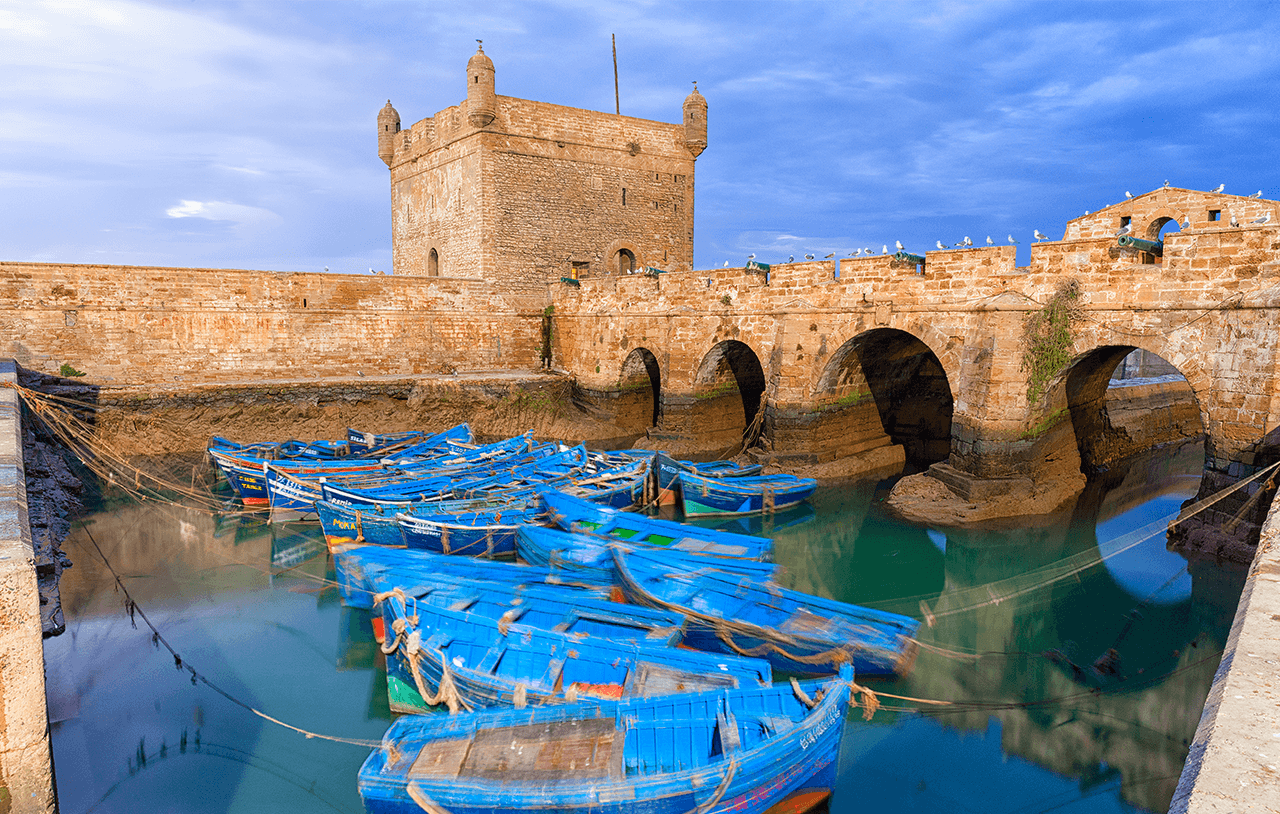
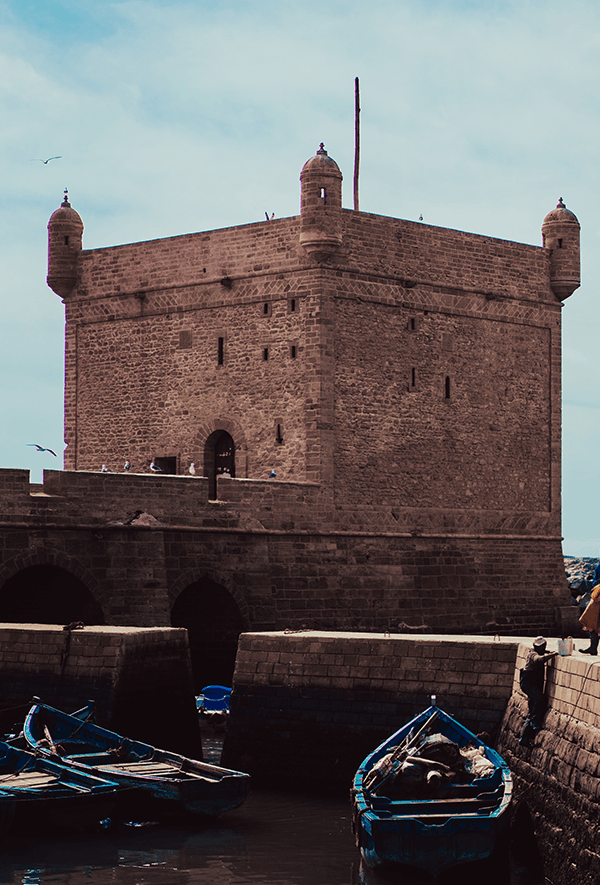
The port, its architecture and its boats have retained almost the same appearance as they had two centuries ago. Its symbol remains the sqala, with its square tower topped with bartizans and, below, the basin where the town’s famous blue fishing boats, in their distinctive shades, float lazily. On this sqala you can admire the imposing Marine Gate. In the 18th century, the area bustled with life upon the arrival of European, Jewish and Muslim traders. Although the port long ago lost its international commercial role, it remains a very lively place. On the quays, stalls sell fish that have barely been unloaded, constantly watched by seagulls hovering above this generous pantry. To the left, the shipyard continues to repair and build a few wooden boats in the traditional way. On the other side of the Marine Gate, small open‑air eateries line up, renowned for their grilled sardines, Essaouira’s flagship fish. They are also happy to prepare other seafood, depending on what the ocean has seen fit to provide. Just a few dozen meters away, Place Moulay El Hassan and Bab El Menzah open onto the medina.
The Marine Gate, Bab el-Marsa
Built in 1796 under the reign of Sidi Mohammed Ben Abdallah, this monumental gate links Place Moulay Hassan to the city’s port. In Vauban style, it is constructed from dressed stone and is recognizable by its two pillars, its two bartizans on the port side, and its classical pediment. This pediment reflects the city’s ecumenical tradition, bearing symbols of the religions of the Book: the Arab crescent for Islam, the scallop shell for Christianity, and Hebrew inscriptions for Judaism.
The sqala of the Kasbah and its ramparts
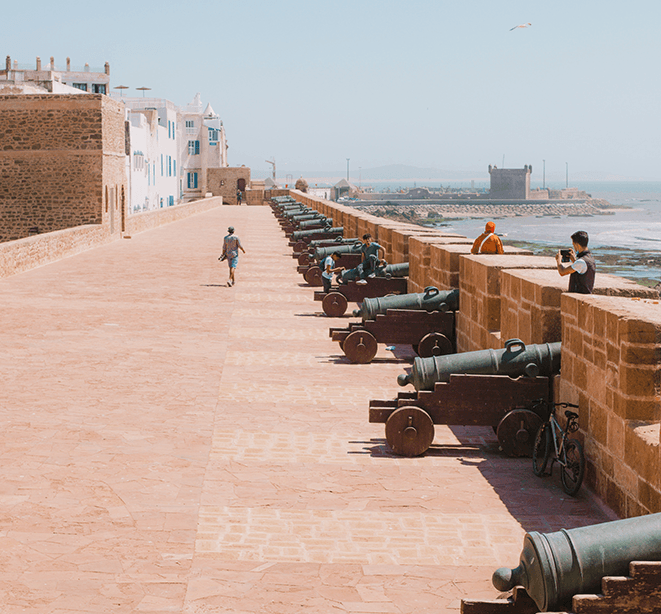
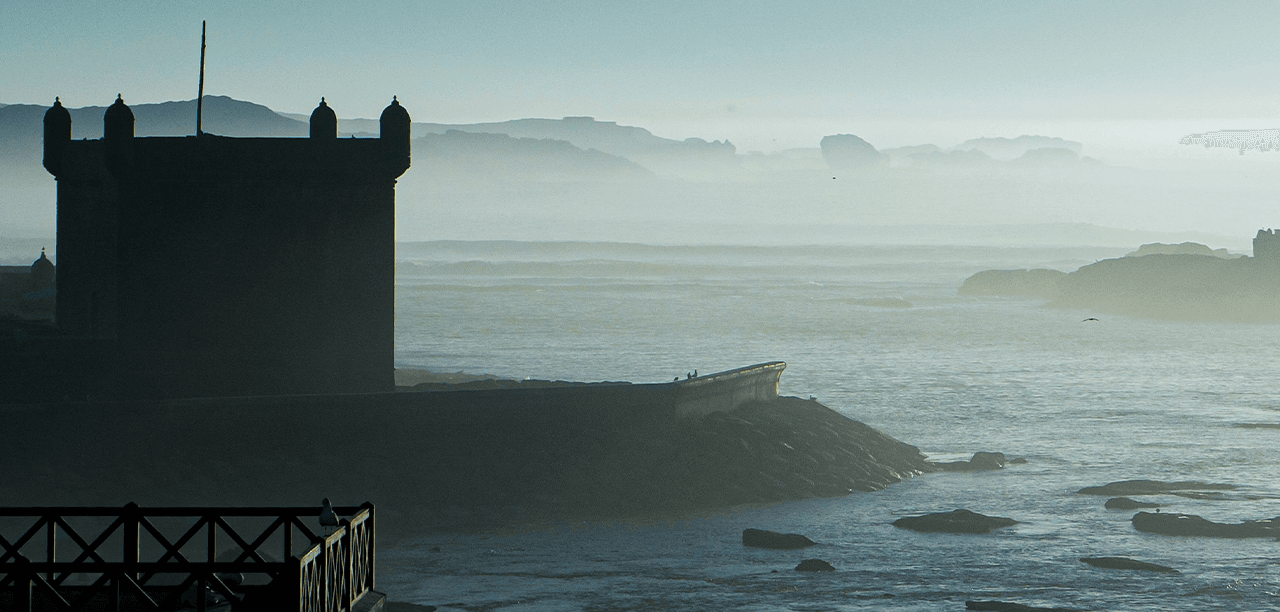
This is one of the city’s postcard images, where visitors love to be photographed. The ramparts and this sqala recall that Essaouira was once a fortified town. The fortress was built in the 18th century, again under the impetus of Sultan Sidi Mohammed Ben Abdallah, and was designed as a powerful citadel. Its imposing rectangular platform, 200 meters long, and its round bastion at the north corner of the fortifications dominate the Atlantic, offering a magnificent view of the ocean, the Purpuraires Islands and the medina. Of course, it no longer has any defensive role, despite its crenellations still armed with decorated cannons pointing out to sea. Today, the site welcomes both locals and visitors, providing a superb backdrop for their photos. Orson Welles shot scenes of his masterpiece “Othello” here, and more recently the famous series “Game of Thrones” chose this exceptional setting as well. Below are the casemates where munitions were once stored. They are now home to workshops and stalls of thuya‑wood craftsmen and other specialties such as argan oil. The most curious visitors may be lucky enough to see artisans reproducing the same gestures as their fathers and grandfathers on thuya wood. All around, Souiri painters of varying levels of talent display their colorful canvases.
Sidi Mohammed ben Abdellah Museum
The Sidi Mohammed ben Abdellah Museum, an ethnographic museum, offers an overview of Essaouira’s craftsmanship and history. It summarizes life in Essaouira from the earliest times to the present day, and the visit can be done in about an hour. You can discover tools dating back to prehistoric times, old photographs, traditional jewelry, weapons, coins, traditional 19th‑century clothing, and a fine collection of musical instruments. The museum is housed in a typical 19th‑century merchants’ house built from the region’s brown dressed stone.
Essaouira, a city of coexistence
Essaouira continues to nurture its tradition of religious coexistence, and places of worship, history and reflection for the three monotheistic religions remain present in this small city. Here are a few.
Bayt al Dakira, or the House of Memory. The medina of Essaouira once had a large number of synagogues, bearing witness to the dynamism of its Jewish community. One of the oldest still standing is the Simon Attias Synagogue, built at the end of the 19th century by this merchant and located in the heart of the former kasbah. After being restored, it became Bayt al Dakira, or the House of Memory. It is at once a research center, a venue for cultural events and a museum dedicated to preserving the memory of Essaouira’s Jews, where you can see old photos, texts and books.
The Church of Our Lady of the Assumption was built in 1936 and is still active. It belongs to the Diocese of Rabat. Unusually for a church in a Muslim country, its bells ring every Sunday.
Cemeteries of all three religions coexist here, as is often the case in Morocco. This small city has one Christian cemetery and two Jewish cemeteries. The Marin Cemetery, nestled along the ocean, is the oldest. It is here that the famous writer Edmond Amran El Maleh, a native of Essaouira who insisted on being buried according to Moroccan Jewish tradition, is laid to rest.
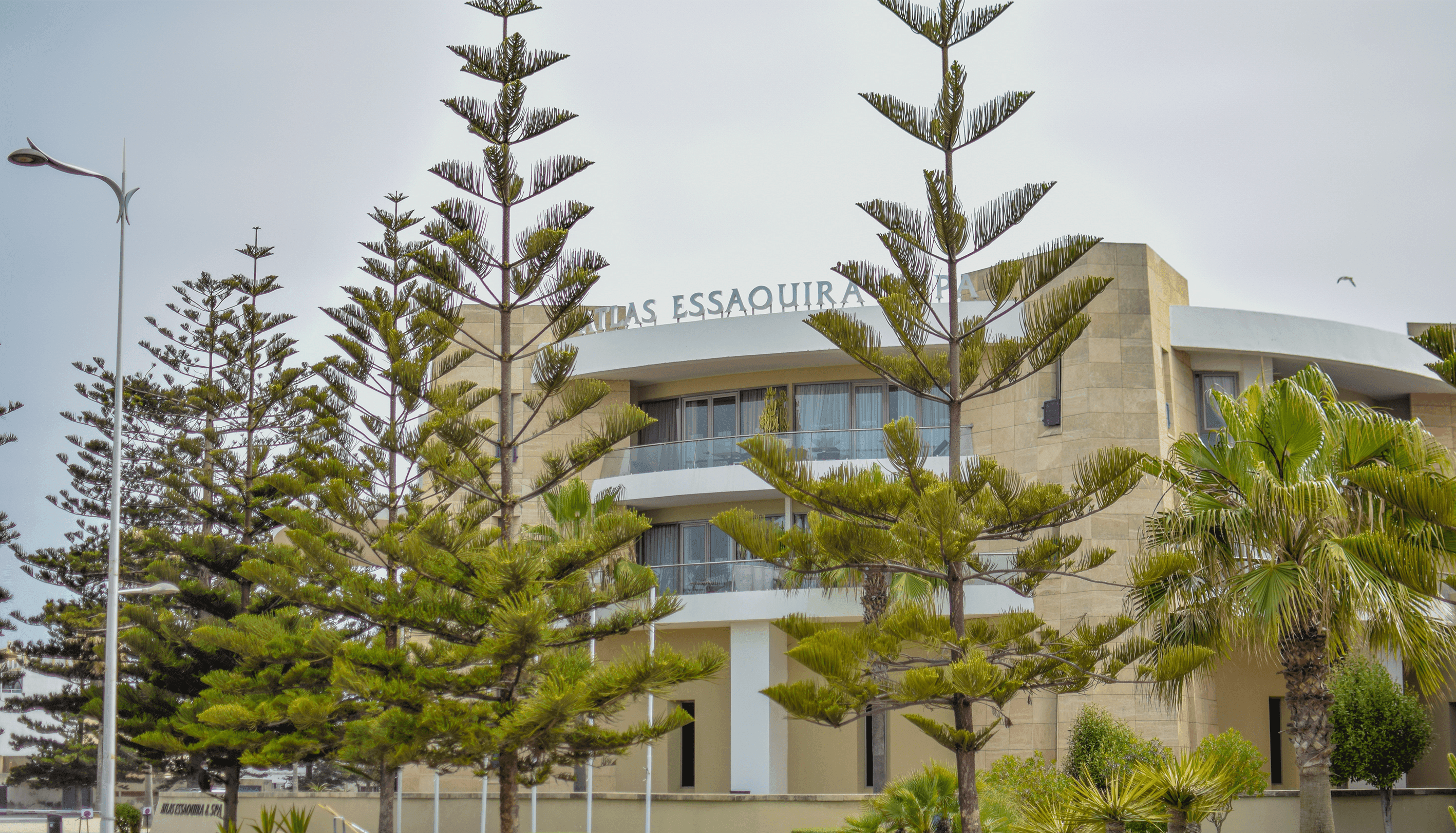
The port city offers various types of accommodation, such as riads and hotels. To fully experience Essaouira, choose a hotel close to the ocean and the medina. This is what the Atlas Essaouira offers. Set facing the Atlantic, it allows you to reach the medina on foot in just a few minutes via the seafront promenade or the beach. Its rooms, suites, three restaurants and bar all share with you this incredible view of the blue Atlantic. The hotel also has a swimming pool, a spa and even meeting rooms.
Essaouira is renowned for its seafood, especially sardines, which are served in many of the city’s restaurants. Moroccan cuisine is also well represented. Atlas Essaouira offers three restaurants with delicious dishes, all enjoying breathtaking views of the ocean.
Seven is undoubtedly the must‑visit restaurant set right on Essaouira’s beach. On the menu, everyone will find something to enjoy: fresh fish, seafood, tapas and light, organic dishes. Its sunny terrace facing the Atlantic is particularly popular.
Safran, the Moroccan restaurant at Atlas Essaouira, serves traditional cuisine prepared with tasty local ingredients in a setting worthy of Essaouira’s legendary hospitality.
Les Alizés offers an international menu with flavors from near and far, along with views of the beach, the blue ocean and the islands through its large bay windows.
Essaouira is best experienced at the local pace. The goal is not to rush from one place to another, but to take your time and really feel its atmosphere and the sense of calm that emanates from it. If you want to visit the city’s historic sites, enjoy a walk on the beach—on foot, on horseback or on camelback—try a water sport and, why not, visit an argan oil cooperative, you should plan at least two nights and three days in the former Mogador. A little longer is even better, giving you time for leisurely seaside lunches and a chance to savor Essaouira’s nightlife.